


What should an OEM buyer verify before pairing a brushless UAV motor and ESC?
A motor and electronic speed controller (ESC) should be evaluated as one propulsion system with its battery, propeller, connectors, mounting and control setup. A voltage or current label by itself does not demonstrate full compatibility. This guide is for purchasing teams comparing components for fixed-wing aircraft, VTOL systems and multirotor equipment.
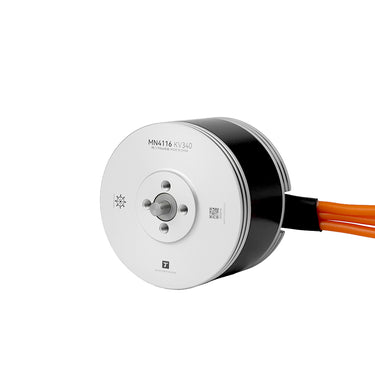
Begin with the actual brushless motor listings and UAV ESC catalog. Record model numbers, options and data-sheet revision before comparing them; different variants may have different operating limits.
1. Record the aircraft and mission requirements
Identify the aircraft architecture, intended operating profile, space and mass limits, ambient conditions, and electrical distribution design. Lift motors and cruise motors in a VTOL aircraft may operate in different regimes. Separate their requirements rather than copying one set of assumptions across both systems.
2. Compare supply voltage and absolute limits
Manufacturer ratings may be stated as nominal voltage, an absolute input range or a LiPo cell count. Determine the battery's maximum charged voltage as well as its expected operating range. Check the motor's permissible supply and the ESC's absolute maximum input. Include wiring and any protective equipment in the design review.
3. Check continuous current under realistic loading
Motor current depends on voltage, rotational speed and propeller load. The ESC must tolerate expected sustained current at the installed cooling conditions. Published peak-current ratings generally apply for limited durations, and cannot replace a continuous-current review. A motor model's KV rating is not a substitute for thrust or power test data.
For a concrete reference, compare the T-Motor FLAME 180A 12S V2.0 ESC listing with the current manufacturer specifications for the intended motor. Another product, the MAD V122 eVTOL motor, is offered as a propulsion motor. These links are examples for exploring individual specifications; they do not establish compatibility with each other.
4. Treat the propeller as part of the electrical load
Propeller diameter, pitch, blade design, installation and air density affect the operating point. Test reports for one propeller cannot always be transferred to another with the same size label. Review the motor manufacturer's tested pairings. The UAV propeller collection provides choices for different airframes, but each option needs its own compatibility check.
5. Verify control signals and thermal installation
Confirm that the flight controller and ESC support the intended command protocol and startup behavior. For demanding applications, document requirements for brake settings, direction, protection mechanisms and any telemetry interface. Cooling and installation conditions can change effective thermal headroom; enclosure design and airflow should be considered before purchasing in quantity.
6. Define the quotation and acceptance package
For OEM or repeat orders, request an exact bill of materials rather than a general model family name. Useful documents include model and variant IDs, motor/ESC/propeller pairing data, connector drawings, firmware identifiers, test conditions, packaging specifications and any agreed inspection criteria. Confirm availability and permitted cross-border supply before making delivery commitments.
Quick sourcing checklist
- Motor and ESC part numbers and variant identifiers are recorded
- Battery chemistry, charged voltage and current expectations are verified
- Propeller selection is supported by relevant performance data
- Mechanical mount, cooling and connector compatibility are checked
- Flight-control protocol and protection behavior are documented
- Supplier quotation covers the exact BOM, quantities and technical documentation
Frequently asked questions
Can a 12S ESC run every 12S motor?
No. Voltage is only one selection criterion. Current, control, thermal, wiring and application requirements must also match.
Does a higher-current ESC increase a motor's thrust?
Not by itself. Thrust depends on the complete propulsion system and operating point, including motor, propeller and power supply.
Should procurement teams buy the motor before choosing the propeller?
System requirements and tested motor-propeller combinations should guide selection together. Component purchases should follow compatibility review.
How can I request an OEM quotation?
Use the UAVMODEL contact page and include model numbers, expected quantities, destination and required documentation. For products available for direct checkout, follow the product page; for reference-only or unavailable products, ask about alternatives.
This is general component selection guidance, not a certification or endorsement of a particular pairing. The manufacturer's model-specific limits and applicable regulations take precedence.