

Yuanhang Studio X1300 Pusher-Prop FPV Fixed-Wing Carrier Aircraft: A Beginner-Friendly 1300mm FPV Platform for Long-Range Flying
Introduction
The Yuanhang Studio X1300 Pusher-Prop FPV Fixed-Wing Carrier Aircraft is a versatile FPV fixed-wing platform designed for pilots who want a stable, efficient, customizable, and easy-to-assemble aircraft. With a 1300mm wingspan, high-wing monoplane configuration, rear-mounted pusher propeller, and extensive use of 3D-printed components, the X1300 combines the practical characteristics of a trainer aircraft with the flexibility expected from a modern FPV platform.
Unlike compact FPV wings designed primarily for speed and aggressive maneuvering, the X1300 focuses on stability, forward visibility, flight endurance, and equipment integration. Its spacious battery compartment supports common 4S LiPo and 21700 battery configurations, while the aircraft provides reserved mounting space for modern FPV systems and additional payload equipment.
The X1300 is therefore suitable for FPV beginners, fixed-wing hobbyists, aerial exploration, DIY UAV builders, and pilots who want an adaptable aircraft platform that can evolve with their skills and equipment.
According to the product specifications, the X1300 has a 1300mm wingspan, a 972mm overall length, a 22.5dm² wing area, and a typical flying weight of approximately 1300g. The recommended power system uses a 2212 KV1400 motor, 8×5 propeller, 40A ESC, and 4S batteries. The manufacturer lists an estimated flight duration of approximately 10–30 minutes depending on the battery, configuration, and flight conditions.
What Is the Yuanhang Studio X1300?
The Yuanhang Studio X1300 is a 1300mm FPV fixed-wing aircraft built around a high-wing monoplane design and rear pusher propulsion system.
Its design philosophy is different from that of conventional RC airplanes. Instead of placing the motor and propeller at the nose, the X1300 places the propeller toward the rear of the aircraft. This configuration leaves the nose and forward camera area relatively unobstructed, making it particularly attractive for FPV applications.
The aircraft also makes extensive use of 3D-printed components. Replacement and modification become easier because users can access printable files for selected plastic components. This gives experienced builders the opportunity to modify mounting structures or replace damaged parts without necessarily replacing an entire airframe.
The X1300 is offered in KIT and PNP configurations, allowing users to select the setup that better matches their preferred electronics and assembly requirements.
Key Features of the X1300 FPV Fixed-Wing Aircraft
1. 1300mm High-Wing Monoplane Design
The X1300 uses a high-wing monoplane configuration with a 1300mm / 51.2-inch wingspan.
A high-wing layout is particularly useful for pilots who prioritize predictable handling and stable cruising rather than extreme aerobatics. The larger wing provides a practical balance between lift, stability, and portability.
The aircraft has a listed wing area of 22.5dm² and a wing loading of approximately 58g/dm². This configuration contributes to its intended trainer and cruising characteristics.
For FPV beginners, a stable airframe can make the transition from multirotors to fixed-wing aircraft considerably easier. Instead of constantly correcting the aircraft during flight, pilots can focus more on learning coordinated turns, energy management, altitude control, and landing technique.
2. Rear-Mounted Pusher Propeller
One of the defining characteristics of the Yuanhang Studio X1300 is its rear pusher propulsion system.
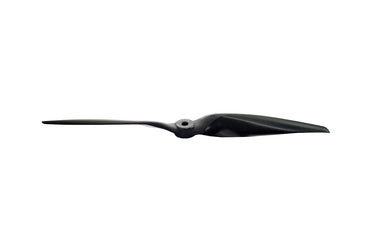
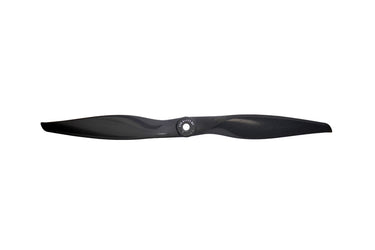
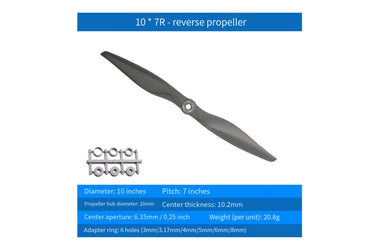
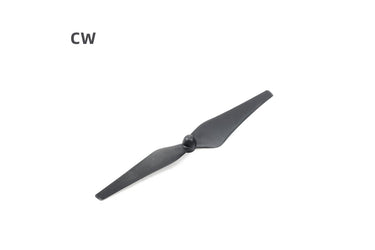
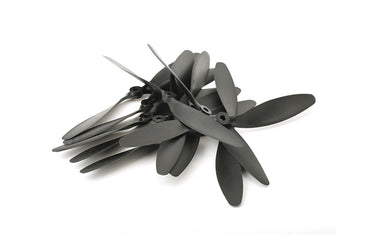
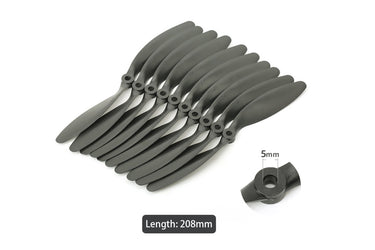
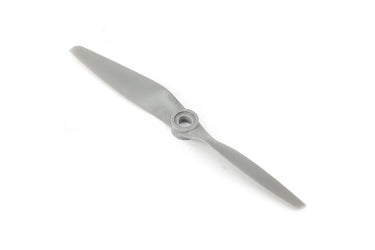
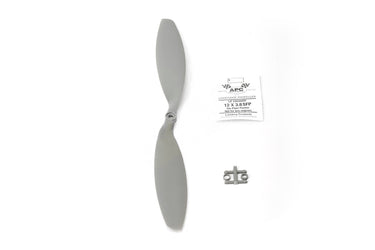
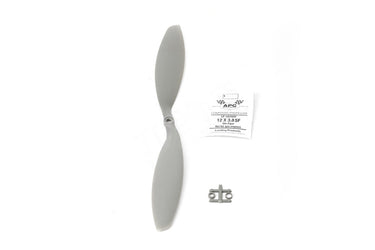
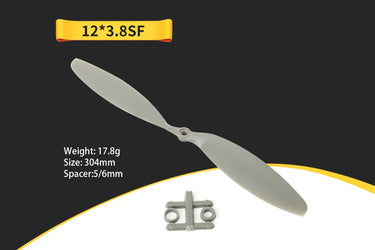
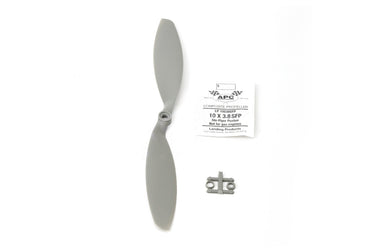
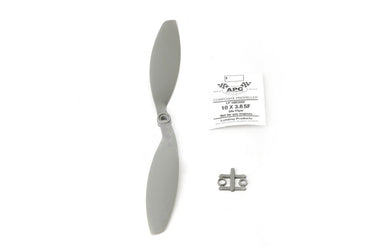
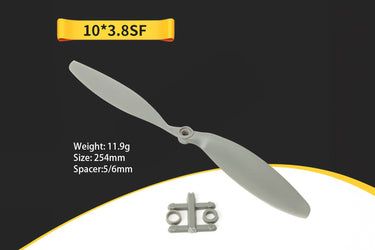
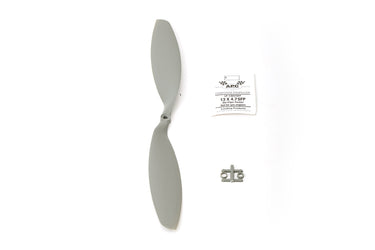
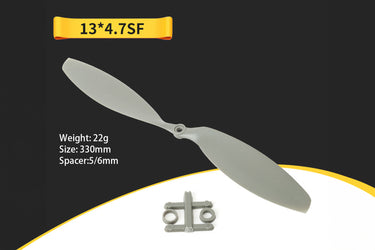
The recommended configuration uses a 2212 KV1400 motor and an 8×5 propeller.
A pusher configuration offers an important advantage for FPV aircraft: the nose area can remain clear for cameras, sensors, and other equipment.
For pilots using an FPV camera at the front of the aircraft, this layout can provide a cleaner forward-facing view without the propeller occupying the central portion of the image.
The rear-mounted motor also gives the X1300 a distinctive UAV-style appearance, making it visually different from traditional tractor-propeller trainers.
3. Designed for FPV Flying
The X1300 is specifically designed around FPV applications rather than simply being a conventional RC airplane with a camera attached.
The airframe includes reserved installation space for FPV transmission equipment. According to the product information, the battery hatch provides a location for installing systems such as DJI O3 and Walksnail Moonlight FPV transmission equipment.
This makes the X1300 compatible with a variety of modern digital FPV configurations.
Depending on the selected electronics, pilots can build the aircraft around:
-
Digital FPV video systems
-
Analog FPV systems
-
Long-range radio receivers
-
GPS modules
-
Flight controllers
-
Autonomous flight equipment
-
Additional onboard sensors
The aircraft's spacious internal layout also makes wiring and component placement easier compared with very compact FPV platforms.
4. Large Battery Compartment
Battery selection has a significant influence on the performance and flight duration of a fixed-wing aircraft.
The X1300 provides a battery compartment measuring approximately 140 × 35 × 35mm, and the manufacturer recommends several battery configurations. These include:
-
4S 2600mAh LiPo
-
4S 3300mAh LiPo
-
21700 4S1P 5000mAh
-
21700 4S2P 10000mAh
The product specification lists a flight duration of approximately 10–30 minutes, depending on configuration and operating conditions.
The ability to use both LiPo and 21700-based battery packs gives the X1300 considerable flexibility.
A 4S LiPo can provide a familiar solution for RC pilots who already have compatible batteries and chargers. A suitable 21700 battery configuration can instead be considered when the priority is increased energy capacity and longer cruising endurance.
However, battery weight should always be considered together with center of gravity, aircraft loading, motor performance, and takeoff characteristics.
5. Flexible FPV and Payload Integration
The X1300 is more than a basic trainer aircraft.
Its structure provides mounting options for additional equipment, and the manufacturer specifically states that the aircraft can support simultaneous installation of a fixed-view camera and a multi-axis gimbal.
This creates opportunities for different applications, including:
-
FPV exploration
-
Aerial photography
-
Video recording
-
Experimental UAV development
-
Mapping experiments
-
Electronics testing
-
Long-duration cruising
-
DIY payload integration
For hobbyists and UAV developers, the ability to modify the aircraft is particularly valuable.
Rather than treating the airframe as a finished product that cannot be changed, the X1300 can serve as a development platform.
6. 3D-Printed Components for Easy Modification
One of the most interesting aspects of the X1300 is its use of 3D-printed components.
The aircraft combines lightweight EPO material with PLA components. The manufacturer provides access to 3D files so that users can print selected replacement or modified parts.
This approach offers several benefits.
Easy Replacement
If a plastic component becomes damaged during a hard landing or transportation, users can potentially print a replacement instead of searching for a completely new airframe component.
Customization
Experienced users can modify the design to accommodate:
-
Different FPV cameras
-
Alternative antennas
-
GPS modules
-
Flight controllers
-
Additional electronics
-
Custom battery mounts
-
Experimental payloads
DIY Development
For makers and 3D-printing enthusiasts, the aircraft can become a practical starting point for experimenting with UAV structural design.
This combination of an off-the-shelf airframe and printable components is one of the reasons the X1300 is attractive to DIY FPV builders.
X1300 Specifications
| Specification | Details |
|---|---|
| Product | Yuanhang Studio X1300 Pusher-Prop FPV Fixed-Wing Carrier Aircraft |
| Model | YH-X1300K |
| Aircraft Type | FPV Fixed-Wing |
| Configuration | High-Wing Monoplane |
| Propulsion | Rear Pusher |
| Wingspan | 1300mm / 51.2in |
| Overall Length | 972mm / 38.3in |
| Wing Area | 22.5dm² |
| Wing Loading | 58g/dm² |
| Flying Weight | Approx. 1300g |
| Recommended Motor | 2212 KV1400 |
| Propeller | 8×5in |
| ESC | 40A |
| Servos | 9g MG Servo ×5 |
| Control Channels | 4CH |
| Controls | Aileron, Elevator, Throttle, Rudder |
| Recommended Battery | 4S 2600–3300mAh |
| Alternative Battery | 21700 4S1P 5000mAh / 4S2P 10000mAh |
| Flight Duration | Approx. 10–30 minutes |
| Main Materials | EPO and PLA |
| Assembly/Test Time | Approx. 15 minutes |
| Skill Level | Beginner |
Specifications are based on the product information provided by UAVMODEL and may vary according to configuration and equipment selection.
X1300 Power System Explained
The recommended power system consists of a 2212 KV1400 brushless motor, 8×5 propeller, and 40A ESC.
This combination is designed around the aircraft's approximately 1300g flying weight and 4S battery architecture.
For a fixed-wing aircraft, the objective of the propulsion system is not simply maximum thrust. A good setup needs to provide enough power for takeoff and climb while maintaining reasonable efficiency during cruise.
The X1300 is designed more as a cruising and exploration platform than a racing aircraft. Therefore, pilots should prioritize a properly matched motor, propeller, ESC, and battery rather than simply installing the highest-powered equipment available.
When changing the recommended power system, users should verify:
-
Motor KV rating
-
Propeller diameter and pitch
-
Maximum motor current
-
ESC continuous current rating
-
Battery voltage
-
Battery discharge capability
-
Aircraft center of gravity
-
Actual flying weight
A propulsion change can significantly affect aircraft behavior, so testing should always be performed carefully.
Battery Selection for the X1300
Battery selection is one of the most important decisions when building an FPV fixed-wing aircraft.
The manufacturer recommends 4S 2600–3300mAh LiPo batteries, while larger 21700-based configurations are also supported.
4S 2600mAh
A 4S 2600mAh battery is a practical choice when relatively low weight and responsive handling are important.
Advantages include:
-
Lower battery weight
-
Easier hand launching
-
Good acceleration
-
Suitable for general FPV flying
4S 3300mAh
A 4S 3300mAh battery offers increased energy capacity while remaining within the recommended battery range.
It can be a good compromise between aircraft weight and flight endurance.
21700 Battery Packs
For pilots focused on endurance, the X1300 can also accommodate 21700-based battery configurations.
The listed options include:
-
4S1P 5000mAh
-
4S2P 10000mAh
These configurations can provide substantially different energy capacity compared with conventional LiPo packs, but their physical size, weight, discharge characteristics, and balance must be evaluated before use.
The heaviest battery should not automatically be considered the best battery. A battery that is too heavy can increase wing loading and change takeoff, landing, stall, and handling characteristics.
Why Choose a Pusher FPV Aircraft?
The pusher configuration is particularly useful for FPV aircraft.
In a conventional tractor aircraft, the motor and propeller are positioned at the front. When a camera is installed in the nose, the propeller may appear in the camera's field of view.
The X1300 moves the propulsion system to the rear.
This creates a cleaner nose area for:
-
FPV cameras
-
HD cameras
-
Gimbals
-
Sensors
-
Experimental payloads
The result is a more flexible forward-facing equipment area.
A pusher configuration is therefore especially attractive for aircraft where forward visibility and payload placement are important design considerations.
Beginner-Friendly Fixed-Wing Platform
The X1300 is listed with a Beginner skill level, and its design reflects that positioning.
For pilots coming from multirotor FPV, fixed-wing aircraft introduce several new concepts:
-
Airspeed
-
Stall speed
-
Glide ratio
-
Coordinated turns
-
Energy management
-
Landing approach
-
Center of gravity
-
Control surface setup
The X1300's high-wing configuration and relatively large wingspan make it more suitable for learning these fundamentals than a highly specialized racing wing.
However, “beginner-friendly” does not mean that a fixed-wing aircraft can be flown without preparation.
New pilots should perform a complete pre-flight inspection, verify the control directions, confirm the center of gravity, check the battery installation, and conduct the first flights in a sufficiently large and legal flying area.
Hand Launch and Ground Takeoff
The X1300 supports hand launching, while landing gear can also be used for ground takeoff if installed. The product information indicates that landing gear is sold separately.
Hand launching is particularly convenient when operating from grass, fields, or locations without a suitable runway.
For hand launching:
-
Verify that the motor and control surfaces operate correctly.
-
Confirm the battery is securely installed.
-
Check the aircraft's center of gravity.
-
Select an appropriate stabilized or manual flight mode.
-
Ensure the flight path is completely clear.
-
Launch directly into a safe open area.
-
Avoid abrupt control inputs immediately after release.
Pilots should never attempt a first flight without checking the aircraft's actual balance and control response.
Simple Assembly and Fast Setup
The X1300 is designed for quick assembly.
The manufacturer states that the aircraft can be assembled without screws or glue and lists an approximate 15-minute build and test time.
This is particularly useful for pilots who want a practical aircraft that can be transported and assembled without a lengthy workshop process.
A fast assembly process also reduces the barrier to entry for beginners.
Before the first flight, however, users should spend additional time checking:
-
Servo operation
-
Control surface direction
-
Motor rotation
-
Propeller installation
-
ESC operation
-
Receiver binding
-
FPV video transmission
-
Battery security
-
Center of gravity
-
Radio failsafe
The advertised assembly time should therefore be regarded as a basic build estimate rather than a substitute for a complete pre-flight inspection.
Four-Channel Control Layout
The X1300 uses a conventional four-channel fixed-wing control arrangement:
-
Aileron
-
Elevator
-
Throttle
-
Rudder
This control layout makes the aircraft compatible with common RC transmitters and fixed-wing flight controllers.
The ailerons control roll, the elevator controls pitch, the rudder controls yaw, and the throttle controls motor power.
For beginners, learning these four basic control functions provides a strong foundation for more advanced fixed-wing aircraft.
Optional Flap Modification
Another interesting feature of the X1300 is its provision for modification.
The manufacturer states that users can modify the aircraft and add flaps in the reserved position.
Flaps can be useful when a pilot wants to alter the aircraft's low-speed characteristics.
Depending on the implementation, flaps may help with:
-
Lower-speed approaches
-
Shorter landing areas
-
Reduced landing speed
-
More controlled approaches
However, adding flaps changes the aircraft's aerodynamics and control setup. The modification should therefore be performed carefully, with appropriate servo installation, mechanical limits, and flight testing.
FPV Camera and Gimbal Configuration
The X1300 is especially interesting for pilots who want more than a simple fixed FPV camera.
The platform can accommodate both a fixed-view camera and a multi-axis gimbal configuration according to the manufacturer.
This opens up several possible configurations.
FPV Exploration Setup
A lightweight FPV camera and digital video transmitter can provide a straightforward immersive flying experience.
HD Video Setup
A separate HD camera can be used for aerial video recording while the FPV system provides live piloting video.
Gimbal Setup
A compatible multi-axis gimbal can be used when the objective is stabilized imaging rather than simply piloting the aircraft.
Because every payload affects weight and center of gravity, users should carefully verify the final configuration before flight.
3D Printing and DIY Customization
The X1300 is particularly suitable for makers who enjoy modifying RC aircraft.
Because selected components are 3D printable, users can explore their own solutions for mounting and structural components.
Possible modifications include:
-
FPV camera mounts
-
Antenna holders
-
GPS brackets
-
Battery retention systems
-
Electronics trays
-
Camera mounts
-
Gimbal mounts
-
Reinforcement parts
-
Custom equipment covers
This makes the X1300 more than a conventional foam aircraft. It can become a platform for learning basic UAV mechanical design.
For users with access to a 3D printer, the ability to reproduce selected components can also make long-term ownership more convenient.
Who Should Buy the Yuanhang Studio X1300?
The X1300 is a strong candidate for several types of users.
FPV Beginners
If you are moving from FPV drones to fixed-wing aircraft, the X1300 provides a relatively stable platform for learning.
RC Airplane Hobbyists
Traditional RC pilots can use the X1300 as a modern FPV-capable aircraft with a large equipment area.
Long-Range FPV Enthusiasts
The 1300mm wingspan, efficient fixed-wing flight profile, and multiple battery options make the aircraft suitable for cruising-oriented FPV applications.
DIY UAV Builders
The 3D-printable components and flexible electronics space provide a useful foundation for experimentation.
Aerial Photography Hobbyists
The clear forward nose area and support for camera and gimbal installation make the aircraft suitable for experimental aerial imaging configurations.
Makers and 3D-Printing Enthusiasts
Users who enjoy designing and printing their own components can take advantage of the aircraft's modular approach.
X1300 vs. Conventional FPV Wings
A conventional FPV flying wing is often optimized for compactness, speed, and aerodynamic simplicity.
The X1300 takes a different approach.
| Feature | X1300 | Typical Compact FPV Wing |
|---|---|---|
| Configuration | High-wing monoplane | Flying wing |
| Propulsion | Rear pusher | Usually pusher |
| Wingspan | 1300mm | Often smaller |
| Beginner Friendly | Yes | Depends on model |
| Camera Integration | Flexible | Usually flexible |
| Payload Potential | Relatively high | Limited by size |
| 3D-Printed Components | Yes | Model dependent |
| Battery Options | Multiple | Model dependent |
| Gimbal Potential | Yes | Usually limited |
| Customization | High | Varies |
The X1300 is therefore better suited to users who prioritize stability, equipment integration, and modification rather than minimum size or maximum speed.
X1300 Flight Performance Expectations
The X1300 should be viewed as a cruising and FPV exploration aircraft, rather than a high-speed racing platform.
Its 1300mm wingspan and high-wing configuration are intended to provide stable flight characteristics.
The exact performance of any individual aircraft will depend on:
-
Battery capacity
-
Battery weight
-
Propeller selection
-
Motor condition
-
Aircraft weight
-
Center of gravity
-
Wind
-
FPV equipment
-
Payload
-
Flight mode
-
Pilot technique
The advertised 10–30 minute flight duration should therefore be treated as an approximate range rather than a guaranteed flight time.
Actual flight time should be determined through controlled testing while maintaining an appropriate battery reserve.
Center of Gravity and Weight Management
Center of gravity is especially important for fixed-wing aircraft.
Adding a larger battery, FPV transmitter, HD camera, gimbal, GPS, or other payload can move the center of gravity away from its intended position.
Before flight, users should ensure that:
-
The battery is firmly secured.
-
The aircraft is correctly balanced.
-
Payloads cannot move during flight.
-
The control surfaces are neutralized correctly.
-
The aircraft does not become excessively tail-heavy or nose-heavy.
A properly balanced aircraft will generally be easier to control and more predictable during takeoff, cruising, and landing.
Recommended X1300 Build Approach
For a straightforward first build, users can follow a configuration based on the manufacturer's recommendations:
Airframe: Yuanhang Studio X1300
Motor: 2212 KV1400
Propeller: 8×5
ESC: 40A
Servos: 9g MG ×5
Battery: 4S 2600–3300mAh LiPo
FPV System: Compatible digital or analog FPV system
Radio: Compatible 4-channel-or-higher transmitter and receiver
More advanced users can add GPS, a flight controller, HD recording equipment, gimbal systems, or other accessories as appropriate.
The final configuration should always remain within the practical weight and power limits of the airframe.
X1300 Pre-Flight Checklist
Before every flight, inspect the aircraft carefully.
Airframe
-
Check the wings for cracks or deformation.
-
Confirm all structural connections are secure.
-
Inspect the tail assembly.
-
Check the 3D-printed components.
Propulsion
-
Confirm the propeller is correctly installed.
-
Check the propeller for cracks.
-
Verify motor rotation.
-
Confirm the ESC operates correctly.
Electronics
-
Check receiver connection.
-
Verify radio range and failsafe.
-
Confirm FPV video transmission.
-
Check GPS and flight controller operation if installed.
Controls
Move every control input and verify the correct surface responds in the correct direction.
Battery
-
Check the battery for damage.
-
Secure it firmly.
-
Verify the connector.
-
Confirm the correct voltage.
-
Check the center of gravity after installation.
A proper pre-flight inspection is one of the most important steps in safe fixed-wing operation.
Frequently Asked Questions
Is the Yuanhang Studio X1300 suitable for beginners?
Yes. The product is officially listed with a beginner skill level. Its high-wing configuration, 1300mm wingspan, and stable cruising-oriented design make it suitable for pilots learning fixed-wing FPV.
What motor does the X1300 use?
The recommended motor is a 2212 KV1400 brushless motor. The recommended propeller is an 8×5.
What ESC is recommended?
The listed ESC specification is 40A.
What battery does the X1300 use?
The recommended batteries include 4S 2600–3300mAh LiPo, with support for 21700-based 4S battery configurations including 5000mAh 4S1P and 10000mAh 4S2P options.
How long can the X1300 fly?
The listed flight duration is approximately 10–30 minutes. Actual endurance depends on battery capacity, aircraft weight, payload, weather, flight style, and power-system configuration.
Can I install DJI O3 or Walksnail equipment?
The product information specifies reserved installation space for DJI O3 and Walksnail Moonlight FPV transmission systems.
Can I install a gimbal?
Yes. The manufacturer states that the X1300 supports simultaneous installation of a fixed-view camera and a multi-axis gimbal.
Can I add flaps?
Yes. The airframe has a reserved position that can be modified to accommodate flaps.
Does the X1300 support hand launching?
Yes. The aircraft is designed for hand launching. Landing gear can also be used for ground takeoff, but the landing gear is sold separately.
How long does assembly take?
The manufacturer lists approximately 15 minutes for build and test time, while the exact time will depend on the selected configuration and electronics.
What materials are used?
The aircraft uses lightweight EPO and PLA components.
Is the X1300 good for long-range FPV?
The X1300 is well suited to cruising-oriented and endurance-focused FPV applications because of its fixed-wing configuration, spacious battery compartment, and support for multiple battery configurations. However, actual range depends on radio/video systems, local regulations, battery capacity, weather, flight profile, and the aircraft configuration.
Final Verdict
The Yuanhang Studio X1300 Pusher-Prop FPV Fixed-Wing Carrier Aircraft is a versatile platform for pilots who want to combine the stability of a conventional high-wing airplane with the immersive experience and customization potential of FPV.
Its 1300mm wingspan provides a practical size for stable flight, while the rear-mounted pusher propeller keeps the nose area clear for cameras and other equipment. The spacious battery compartment supports several 4S power options, and the aircraft can accommodate modern FPV transmission systems, fixed cameras, gimbals, and experimental payloads.
The extensive use of 3D-printed components is another major advantage. Users can access printable files for selected components, making replacement and customization more accessible and turning the X1300 into a useful DIY UAV development platform.
For beginners, the high-wing layout and straightforward four-channel control system provide a relatively approachable entry into fixed-wing FPV. For experienced pilots, the modular structure offers plenty of opportunities for customization and experimentation.
Overall, the Yuanhang Studio X1300 is best understood not simply as an RC airplane, but as a flexible 1300mm FPV fixed-wing platform for cruising, aerial exploration, camera integration, DIY development, and long-duration hobby flying.
For pilots searching for a beginner-friendly FPV fixed-wing aircraft, 1300mm FPV airplane, pusher-prop FPV plane, long-range FPV fixed wing, DIY UAV platform, or customizable RC fixed-wing aircraft, the X1300 deserves serious consideration.