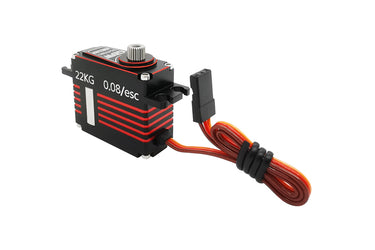


EMAX Servo ES3003 / ES3004 / ES3053 / ES3054 Digital & Analog Servo Review: Complete Buying Guide for RC Airplanes, UAVs, Robots, and DIY Projects
Meta Title: EMAX ES3003 ES3004 ES3053 ES3054 Servo Review | Complete Buyer's Guide
Meta Description: Discover the differences between the EMAX ES3003, ES3004, ES3053, and ES3054 servos. Compare analog vs digital, plastic vs metal gears, specifications, applications, installation tips, and FAQs before buying.
EMAX ES3003 / ES3004 / ES3053 / ES3054 Servo Review
Servos are among the most important components in every RC aircraft, UAV, RC car, robot, and automation project. Even the best flight controller or transmitter cannot compensate for an unreliable servo. If precise control, durability, and stable performance are your priorities, the EMAX ES3003, ES3004, ES3053, and ES3054 servo series offers an excellent balance between affordability and professional performance.
The EMAX ES3000 series has become a popular choice among RC enthusiasts because it provides multiple configurations for different budgets and applications. Whether you need an economical analog servo or a high-response digital metal gear servo, there is a model designed for your project.
According to the official product specifications, all four models share the same compact dimensions, operating voltage, and output torque, while differing in control technology (analog vs. digital) and gear material (plastic vs. metal).
Overview of the EMAX ES3000 Series
The series consists of four models:
| Model | Control Type | Gear Material | Weight |
|---|---|---|---|
| ES3003 | Analog | Plastic | 17.5g |
| ES3004 | Analog | Metal | 20g |
| ES3053 | Digital | Plastic | 17.5g |
| ES3054 | Digital | Metal | 20g |
Every model features:
- Operating Voltage: 4.8V–6.0V
- Torque: 3.0–3.5 kg·cm
- JR/Futaba compatible connector
- Standard 23T output spline
- Compact dimensions (28 × 12.2 × 26.5 mm)
- Suitable for airplanes, helicopters, robots, RC vehicles, boats, and UAV applications.
Key Features
1. Four Models for Different Budgets
Unlike many servo families offering only one configuration, EMAX provides four variants:
- Budget analog plastic gear
- Durable analog metal gear
- High-response digital plastic gear
- Professional digital metal gear
Users can choose the most suitable model without paying for features they don't need.
2. Stable 4.8V–6V Operation
All models operate safely from:
- 4-cell NiMH receiver packs
- 5V BEC
- 6V BEC
- Most standard RC receiver power systems
This wide voltage compatibility makes installation straightforward across many RC platforms.
3. Consistent Torque Output
The entire series delivers approximately:
- 3.0 kg·cm @ 4.8V
- 3.5 kg·cm @ 6.0V
This level of torque is ideal for:
- Trainer airplanes
- Foam aircraft
- Park flyers
- Small helicopters
- Educational robots
- Robotic arms
- DIY automation
4. Compact Lightweight Design
Dimensions:
28 × 12.2 × 26.5 mm
Weight:
- 17.5g (Plastic Gear)
- 20g (Metal Gear)
The compact footprint allows installation inside narrow fuselages and lightweight UAV frames.
Analog vs Digital Servo
One of the biggest questions buyers ask is whether they should choose analog or digital.
Analog Servo (ES3003 / ES3004)
Advantages:
- Lower current consumption
- More affordable
- Smooth movement
- Excellent for beginner aircraft
Best for:
- Trainers
- Foam airplanes
- RC boats
- General hobby projects
Digital Servo (ES3053 / ES3054)
Advantages:
- Higher holding force
- Faster response
- Improved positioning accuracy
- Better resistance to external loads
- Ideal for demanding control surfaces
Best for:
- Aerobatic airplanes
- UAV control surfaces
- Precision robotics
- FPV aircraft
Digital servos generally maintain their position more accurately because of their higher internal update rate, making them suitable for applications requiring precise control.
Plastic Gear vs Metal Gear
Another important choice is gear material.
Plastic Gear
Advantages:
- Lightweight
- Lower cost
- Quiet operation
- Adequate for low-load applications
Ideal for:
- Foam airplanes
- Indoor aircraft
- Lightweight robots
Metal Gear
Advantages:
- Higher durability
- Better impact resistance
- Longer service life
- Better for larger control surfaces
Recommended for:
- Fixed-wing UAVs
- RC helicopters
- RC trucks
- High-speed aircraft
- Professional UAV applications
Performance Specifications
| Feature | Value |
|---|---|
| Operating Voltage | 4.8–6V |
| Torque | 3.0–3.5 kg·cm |
| Speed | 0.15 sec / 60° @4.8V |
| Speed | 0.13 sec / 60° @6V |
| Connector | JR / Futaba Universal |
| Spline | 23T |
| Rotation | Clockwise |
| Dimensions | 28 × 12.2 × 26.5 mm |
These specifications remain consistent across the series, with differences mainly in electronics and gear material.
Best Applications
RC Airplanes
Ideal for:
- Elevator
- Rudder
- Ailerons
- Flaps
Suitable aircraft:
- Foam trainers
- Balsa airplanes
- Gliders
- Scale aircraft
Fixed-Wing UAVs
Reliable control is essential for autonomous flight.
These servos can be installed on:
- Rudder
- Elevator
- Flaps
- Payload release systems
RC Helicopters
Metal gear versions offer better resistance to vibration and repeated cyclic loads.
RC Cars
Suitable for:
- Steering
- Throttle
- Brake mechanisms
Especially useful in:
- Crawlers
- Touring cars
- DIY vehicles
Robotics
The digital versions are particularly suitable for:
- Robotic joints
- Educational robots
- Mechanical arms
- Automation systems
Which Model Should You Choose?
Choose ES3003 if:
- Lowest cost is your priority
- Building foam aircraft
- Beginner pilot
- Lightweight applications
Choose ES3004 if:
- Need stronger gears
- Flying larger aircraft
- Better durability desired
Choose ES3053 if:
- Require digital precision
- Lightweight aircraft
- Faster response
Choose ES3054 if:
- Need maximum durability
- Precision control
- Professional UAV
- Aerobatic airplane
- Heavy control loads
Installation Tips
For optimal performance:
- Use a stable 5V–6V BEC.
- Avoid forcing the servo beyond its mechanical travel.
- Secure the servo firmly to minimize vibration.
- Match the servo horn length to the required control throw.
- Verify linkage geometry before the first flight.
- Center the servo electronically before attaching the servo arm.
Maintenance Tips
Routine maintenance can significantly extend servo life:
- Keep gears free from dust and debris.
- Inspect linkage for binding.
- Replace damaged servo horns promptly.
- Check mounting screws after hard landings.
- Avoid prolonged stall conditions.
Advantages
- Affordable pricing
- Four versions for different applications
- Compact size
- JR/Futaba compatibility
- Reliable torque output
- Digital options available
- Metal gear upgrades available
- Easy installation
- Suitable for aircraft, UAVs, robots, and RC vehicles
Frequently Asked Questions
Are these servos compatible with Futaba receivers?
Yes. They use JR/Futaba universal connectors, making them compatible with most modern RC receivers.
Can they run on 6V?
Yes.
The supported operating voltage is:
4.8V–6.0V
Which servo is best for a trainer airplane?
The ES3003 is an excellent low-cost option for beginners.
Which model is best for UAV applications?
The ES3054 Digital Metal Gear Servo is the preferred choice because it combines precise digital control with durable metal gears.
Are metal gears always better?
Not necessarily.
Plastic gears are lighter and sufficient for many foam aircraft, while metal gears are preferable for higher loads and longer service life.
Can these servos be used in robots?
Absolutely. The digital models, especially the ES3054, are well suited for robotic arms, educational robots, and automation projects.
Final Thoughts
The EMAX ES3003, ES3004, ES3053, and ES3054 servo family provides a versatile lineup that covers everything from entry-level RC aircraft to demanding UAV and robotics applications. With a shared 4.8–6.0V operating range, approximately 3.0–3.5 kg·cm of torque, JR/Futaba compatibility, and options for both analog or digital electronics as well as plastic or metal gears, users can select a servo that matches both performance requirements and budget. Official specifications confirm these models are compact, easy to integrate, and suitable for a wide variety of RC platforms.
From an SEO perspective, this product targets high-value search terms such as EMAX ES3054 Servo, EMAX ES3004 Metal Gear Servo, Digital Servo for RC Airplanes, 23T Servo, JR Futaba Compatible Servo, RC Aircraft Servo, and UAV Control Surface Servo, making it an excellent product category for attracting organic traffic from hobbyists, UAV builders, and robotics enthusiasts.