




Makeflyeasy
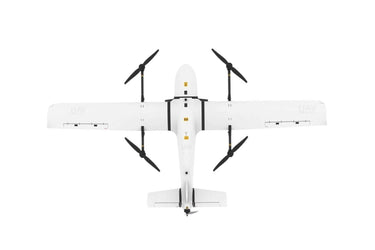
Makeflyeasy Pioneer 3200mm 无人机固定翼 VTOL 飞翼无人机
Last 90 Days Sales: 39 PCS
Expected shipping date is 7~14 days after payment.7-15天
products.product.pickup_availability.unavailable
Customers who can not place an order please contact us;
翼展:3.2米
机身长度:1.68米
机身高度:0.41米
电机间距:1米
经济巡航速度:22米/秒(23公斤起飞重量),21米/秒(20公斤起飞重量)
最大起飞重量:24.9公斤(500米海拔)
最大载荷:5公斤
机翼面积:100平方分米
飞机迎角:0-2°
最大飞行速度:35米/秒
机翼安装角:2.9°
失速速度:14米/秒
最大爬升角:3.5°
转场速度:16米/秒
最大俯冲角:5°
升限:4000米(海拔)
最大滚转角:上22°,下28°
抗风等级:5级
副翼偏转角:30°
起降模式:垂直起降
平尾偏转角:上28°,下22°
拆装方式:免工具拆装
垂尾偏转角:左30°,右30°
续航时间:载荷1公斤,飞行速度20.5米/秒,起飞重量20.6公斤,飞行时长230分钟,航程290公里。
载荷3公斤,飞行速度21.5米/秒,起飞重量22.6公斤,飞行时长210分钟,航程275公里。
载荷5公斤,飞行速度22.5米/秒,起飞重量24.6公斤,飞行时长176分钟,航程242公里。
注意:
1、如果您未能直接从我们的网店下单,请联系我们的销售团队获取支持。
由于原包装尺寸过大,超出无人机出口渠道的尺寸限制,我们需要将原包装拆分为两个较小的包裹。
Frequently Asked Questions (FAQ)
Q. What are the main features of the Makeflyeasy Pioneer 3200mm fixed-wing VTOL UAV?
A: The structure uses composite materials such as carbon fiber and EPO foam, providing high strength.
- Wingspan: 3200 mm, wing area: 100 square decimeters.
- Maximum payload: 5 kg.
- Features Vertical Takeoff and Landing (VTOL) capability, requires no runway, adapts to complex terrain, with wind resistance up to level 5.
- Tool-free quick-release design for rapid deployment.
Q. How does the VTOL capability benefit UAV operations?
A: The Vertical Takeoff and Landing (VTOL) capability allows the UAV to take off and land vertically without a runway, thereby improving deployment flexibility in various environments. This feature simplifies takeoff operations in narrow or rugged areas, making it particularly suitable for surveying, surveillance, and inspection missions.
Q. What is the operating speed range and maximum speed of the Pioneer 3200mm VTOL UAV?
A: Stall speed: 14 m/s, cruise speed: 22 m/s (at takeoff weight of 23 kg), 21 m/s (at takeoff weight of 20 kg), maximum speed: 35 m/s.
The Pioneer 3200mm UAV VTOL has a wingspan of 3.2 meters, a maximum takeoff weight of 24.9 kg, a flight altitude of 500 meters, and can carry various payloads required for different applications.
Q. How long can the Pioneer 3200mm VTOL UAV stay airborne with different payloads?
A: With a payload of 1 kg, flight speed 20.5 m/s, takeoff weight 20.6 kg, flight time 230 minutes, range 290 km. With a payload of 3 kg, flight speed 21.5 m/s, takeoff weight 22.6 kg, flight time 210 minutes, range 275 km. With a payload of 5 kg, flight speed 22.5 m/s, takeoff weight 24.6 kg, flight time 176 minutes, range 242 km.


The Pioneer employs an efficient aerodynamic airfoil to improve the lift-to-drag ratio, increases the aspect ratio of the wing, and optimizes the wingtip to reduce induced drag, ultimately maximizing lift and minimizing drag.

Flight Performance Specifications:
1. Airframe Configuration: PRO and IND variants feature a base airframe weight of approximately 9.2kg (excluding battery pack and payload systems).
2. Power System: Equipped with four 6S 30000mAh semi-solid-state battery cells (energy density: 260Wh/kg) configured in a 2P2S arrangement for 12S power delivery.
3. Test Parameters: Takeoff elevation 460m MSL, operational altitude 80m AGL, flight pattern consists of a rectangular circuit with 600m longitudinal and 400m lateral dimensions (2km total perimeter).
BOM/WIRING


Structural Engineering
Advanced composite construction for optimal strength-to-weight performance

The airframe employs carbon fiber reinforced polymer (CFRP) and engineering-grade thermoplastics, incorporating EPO (expanded polyolefin) integral foam molding for the aerodynamic shell, ensuring outstanding structural integrity with minimal weight penalty.

Both forward and rear wing spars utilize an integrated box-beam design, increasing load-bearing ability and torsional stiffness during flight.

Gram-level precision weight control is attained via structural analysis and overload testing protocols, optimizing mass distribution based on stress profiles in wing, empennage, and fuselage assemblies.

The nose, wings, and tail use a tool-free quick-release design, reducing the time needed for disassembly and assembly of the aircraft.

The nose section features a four-point interlocking connection structure, known for its stability and ease of disassembly.

The nose section features two 9-pin connectors facilitating communication between the aircraft's flight control system and signals like image transmission, remote control, and airspeed.

Our battery compartment, measuring 340x220x156mm, is designed for four 6S 30000mAh semi-solid-state batteries. Secure them with durable nylon fiber and metal buckle ties.

Aluminum alloy and carbon fiber landing gear, compact when folded. High ground clearance when deployed, large payload capacity, tail rotor does not touch ground.

The aircraft's center of balance is positioned at the wing wing swivel.Before takeoff, always verify that the aircraft's center of balance aligns with the wing swivel.

The compartment measures 130x45x34 mm with an optional 200A power distribution board, dual Hall effect current detection, Dronecan digital communication, and simple efficient wiring.

The payload compartment measures 395x216x151mm and can hold a lightweight lidar unit weighing 3-5kg.

The cabin includes cable trays and detachable baffles, ensuring straightforward and effective wiring.

The flight control cabin adopts an open design platform, compatible with open-source/commercial flight control installations. The optional IND version flight control can optimize the flight path sequence and direction.

The GPS compartment can handle dual GPS + compass modules, and the electromagnetic environment is pristine.

Two RTK antenna mounting spots are allocated at the front and back of the fuselage, enabling dual RTK direction finding capabilities.

Optional cruise electronic speed controller (ESC) belly mounting, external aluminum casing for superior heat dissipation.

The vertical tail fin may come pre-embedded with a 195mm rat-tail rubber rod antenna, enhancing support strength and minimizing electromagnetic interference.

The horizontal stabilizer boasts a tool-less quick-release mechanism; a simple push securely locks it, while a press effortlessly releases it.

The tail fin can be fitted with an all-metal hollow cup servo, providing increased torque and a more robust metal rocker arm. The servo does not need pre-installation, ensuring convenient installation.

An extensive flight testing has led to a setup with 6-series motors and 21-inch propellers, resulting in low power consumption and extended endurance. Power output is precisely tailored to meet cruise aerodynamic requirements.

The wing's total rigidity is maintained by two sets of sleeves. The main sleeve is 20x945mm in diameter, with the inner sleeve measuring 17x1150mm. The secondary sleeve is 17x945mm in diameter, and the inner sleeve is 14x1000mm.

Two industrial-grade high-current connectors separate the wings and fuselage, enhancing current carrying capacity and achieving synchronous separation of electrical and mechanical components.

The steering gear bay facilitates the placement of an airspeed meter, connecting to both dynamic and static airspeed tubes for enhanced airspeed detection.

The dual aileron servos' parallel drive design ensures safety redundancy and enhances stability in high-speed flight.

The control surfaces are strengthened with embedded carbon nanotubes, and the rudder angle fixing plate is expanded to minimize control surface deformation. High-strength hinges link the control surfaces for accurate control and dependable connection.

The wingtips have pre-installed navigation light mounting locations for future modifications and flight safety.

The rotor follows a standard quadrilateral format with a 1m side, aligning with the fixed wing's center of gravity for seamless flight transitions.

Applying a film to the upper and lower surfaces of the wing root enhances the dispersion of wing loads and improves torsional stiffness.

When used with the optional wiring harness, the vertical lift's entire boom facilitates maintenance by enabling easy installation and removal.

The midpoint of the arm utilizes 30mm carbon fiber square tubing, securely fastened to the primary and secondary carbon tubing of the wing with 8 screws for stability.

The square and round tubes utilize an aluminum alloy self-locking folding design, enabling easy folding and secure locking with a simple press and turn mechanism.

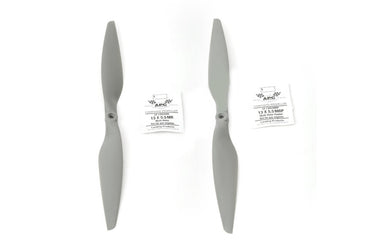
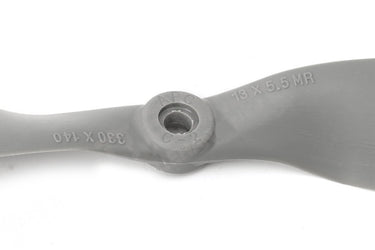
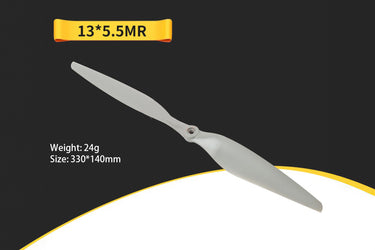
An in-depth analysis resulted in choosing a 6-series motor and a 22-inch carbon fiber propeller, achieving a maximum pulling force of 15kg. The high-power-density motor leads to a lighter weight for the same pulling force.

Optional high-power ESC, firmware optimized for motor and propeller characteristics, minimizes heat generation and maximizes efficiency. Utilizes large MOS chip for robust power output, validated at 80℃ for longevity.
New products








Latest News
GDW DS635MG 35KG High Torque Servo: Professional Digital Metal Gear Servo for RC Aircraft, UAV and High Performance Models
GDW DS635MG 35KG High Torque Servo: Professional Digital Metal Gear Servo for RC Aircraft, UAV and High Performance Models Introduction In the world of RC aircraft, UAV platforms, helicopters, and...
SKYEYE S360 3600mm Glass Fiber UAV Fixed Wing Drone: A Professional Long-Endurance Platform for Industrial Applications
SKYEYE S360 3600mm Glass Fiber UAV Fixed Wing Drone: A Professional Long-Endurance Platform for Industrial Applications Introduction: A High-Performance Fixed Wing UAV Designed for Long Missions The demand for professional...
HEQUAV NOVA SE K8-V2 High-Performance Quadcopter Drone: Professional AI Drone for Inspection, Mapping & Industrial Applications
HEQUAV NOVA SE K8-V2 High-Performance Quadcopter Drone: Professional AI Drone for Inspection, Mapping & Industrial Applications Meta Title HEQUAV NOVA SE K8-V2 Quadcopter Drone Review | AI Tracking UAV for...
EMAX Servo ES3003 / ES3004 / ES3053 / ES3054 Digital & Analog Servo Review: Complete Buying Guide for RC Airplanes, UAVs, Robots, and DIY Projects
EMAX Servo ES3003 / ES3004 / ES3053 / ES3054 Digital & Analog Servo Review: Complete Buying Guide for RC Airplanes, UAVs, Robots, and DIY Projects Meta Title: EMAX ES3003 ES3004...